The Real Difference That Impacts Durability, Brand Image & Long-Term Profitability
In today’s competitive apparel industry, uniform manufacturers face a critical choice:
Produce uniforms at scale using mass produced uniform fabric
Or invest in quality uniform fabric that builds long-term brand value
Across global markets—from industrial sectors in Asia to hospitality brands in Dubai—this decision directly impacts:
- Customer retention
- Brand reputation
- Operational costs
- Product lifespan
But here’s the reality most competitors don’t talk about:
Uniforms are not just garments. They are performance products.
At Aurora Textiles, UAE, we work closely with uniform manufacturers supplying to healthcare, hospitality, industrial, and corporate sectors worldwide. This blog breaks down the real difference between mass production and quality-focused manufacturing, backed by practical insights and fabric-level understanding.
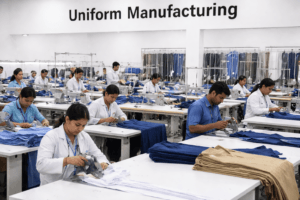
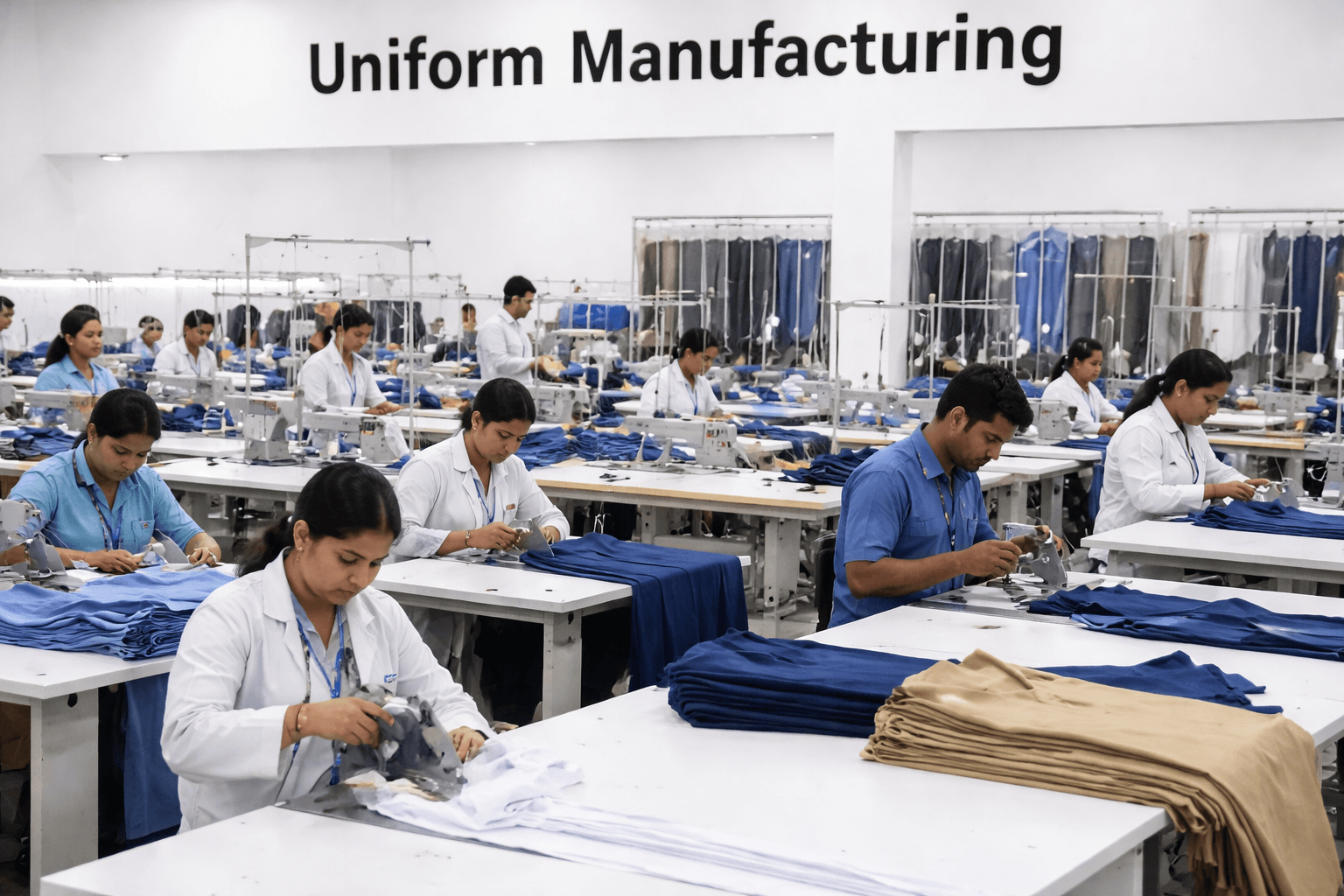
What Does “Mass-Produced Uniform Fabric” Really Mean?
Mass-produced uniforms focus on:
- High volume output
- Low-cost materials
- Fast turnaround
- Minimal customization
Typical Characteristics:
- Lower GSM fabrics (often thinner)
- Basic polyester-heavy blends
- Limited finishing processes
- Reduced durability over time
Why Manufacturers Choose It:
Lower upfront cost
Competitive pricing in tenders
Faster production cycles
What Defines Quality Uniform Fabric?
Quality-focused uniforms are engineered for performance, durability, and professional appearance.
Key Features:
- Balanced GSM for structure & comfort
- High-grade yarn quality
- Advanced finishing (anti-pilling, wrinkle resistance)
- Better breathability and moisture management
- Long wash-cycle durability (50+ washes)
- Suitable for Industrial Laundry
The Result:
Longer garment lifespan
Better brand perception
Higher client retention
Lower replacement frequency
This is where many competitors fall short — they talk about “premium quality” but don’t explain what actually defines it.
The Hidden Cost of Cheap Uniforms (Data-Driven Insight)
One major content gap in the industry:
Cost per wear vs cost per piece
Example:
- Low-cost uniform lasts: ~20 washes
- Quality uniform lasts: 60+ washes
Even if the initial cost is higher, quality uniforms reduce replacement cycles by up to 2–3x, making them more economical long-term.
For large organizations (hospitals, hotels, factories), this translates into:
- Lower procurement frequency
- Reduced operational disruption
- Better ROI
How Fabric Impacts Uniform Performance
Fabric is the foundation of uniform quality — yet often the most overlooked factor.
Key Fabric Performance Indicators:
Durability
Higher thread count and stronger yarn = longer lifespan
Breathability
Critical in hot regions like United Arab Emirates
Color Retention
Prevents fading after repeated washing
Shape Retention
Maintains professional appearance over time
Comfort
Directly affects employee productivity
A poorly chosen fabric can damage even the best garment design.
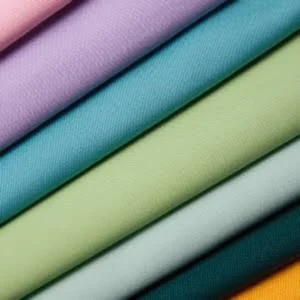
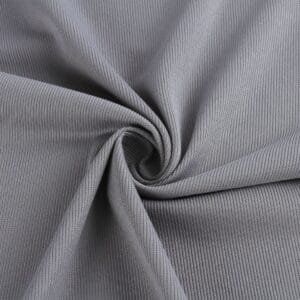
Types of Fabrics Used in Uniform Manufacturing
Understanding fabric types is crucial for uniform manufacturers aiming to deliver quality.
Poly-Cotton Blend (Most Popular)
Best for:
- Corporate uniforms
- Hospitality
- Industrial workwear
Benefits:
- Durable
- Wrinkle-resistant
- Cost-effective
- Balanced comfort
100% Cotton
Best for:
- Healthcare
- Premium uniforms
Benefits:
- Breathable
- Soft
- Ideal for hot climates
Stretch Blends (Elastane Mix)
Best for:
- Active roles
- Hospitality & service sectors
Benefits:
- Flexibility
- Better fit
- Enhanced comfort
Why Quality Matters More in UAE & GCC Markets
In regions like Dubai, uniforms face extreme conditions:
- High temperatures
- Humidity
- Frequent washing
Mass-produced fabrics often fail under these conditions.
Quality Uniform Fabric Ensures:
Sweat management
Heat resistance
Long-term durability
Professional appearance even after repeated use
For industries like hospitality and healthcare in UAE, quality is not optional — it’s essential.
Reputation: The Biggest Differentiator for Uniform Manufacturers
Here’s the truth:
Clients don’t remember the cheapest supplier.
They remember the most reliable one.
Uniform manufacturers who focus on quality:
- Build long-term contracts
- Get repeat business
- Earn referrals
- Reduce complaints and returns
In contrast, mass-focused manufacturers often compete only on price — a race that erodes margins.
The Smart Approach: Balancing Scale & Quality
The best uniform manufacturers don’t choose between mass and quality.
They optimize both:
- Efficient production systems
- High-quality fabric sourcing
- Industry-specific customization
This balance ensures:
Competitive pricing
Strong product performance
Scalable growth
Why Choose Aurora Textiles for Quality Uniform Fabric?
At Aurora Textiles, based in Dubai, we support uniform manufacturers with fabrics engineered for performance.
Designed for UAE climate conditions
Durable for high wash cycles
Consistent quality in bulk production
Suitable for healthcare, hospitality & industrial use
We don’t just supply fabric — we support manufacturers in building long-term reputation through quality.
Conclusion
Mass production may win short-term contracts.
Quality wins long-term trust.
For uniform manufacturers, the real competitive advantage lies in:
- Fabric selection
- Product durability
- Performance consistency
Because in the uniform industry:
The product is worn daily
The performance is visible
The quality defines your brand
FAQs
1. What is the difference between mass-produced and quality uniforms?
Mass-produced uniforms focus on cost and volume, while quality uniforms focus on durability, comfort, and long-term performance.
2. Why is fabric important in uniform manufacturing?
Fabric determines durability, comfort, breathability, and how long the uniform maintains its professional appearance.
3. Which fabric is best for uniforms?
Poly-cotton blends are widely used due to their balance of durability, comfort, and cost-efficiency.
4. Are quality uniforms more expensive?
Initially yes, but they are more cost-effective long-term due to longer lifespan and fewer replacements.
5. Why is quality important in hot climates like UAE?
High temperatures and frequent washing require fabrics that are breathable, durable, and resistant to wear.