If you’ve just moved to Dubai, or you’re planning a trip and want to bring fabric home, the city’s reputation is real: this is one of the great places in the world to buy cloth. Silks, cottons, linens, wools, heavily embroidered pieces, plain workhorse fabrics for everyday sewing — it’s all here, often at prices that would make a European fabric shop weep.
The catch is that “it’s all here” also means it’s easy to overpay, or to come home with something that looked gorgeous on the roll and falls apart after two washes. This guide is about buying well, not just buying.
Where to go
The heart of the fabric trade is the Old Textile Market in Meena Bazaar, on the Bur Dubai side of the creek. Narrow lanes, shops stacked to the ceiling with bolts, and the kind of density where you can compare ten cottons in ten minutes. If you want selection and the ability to haggle, start here.
Beyond the old market, you’ll find fabric in the malls and in standalone shops across the city, generally at fixed (higher) prices with a calmer experience. And there’s a growing amount of fabric sold online in the UAE, which is convenient but takes away the one thing that matters most with cloth: the ability to feel it before you buy.
For anything beyond a personal purchase — if you’re a tailor, running a boutique, or ordering in bulk — the relevant places aren’t stores at all but wholesalers and distributors, who work differently. More on that below.
How to judge fabric quality without being an expert
You don’t need decades in textiles to avoid the obvious mistakes. A few habits catch most problems.
Feel the weight
Hold the fabric up and let it drape over your hand. Good cloth has a substance to it that’s hard to fake. Very light, papery fabric sold as “premium” usually isn’t.
Check the weave
Hold it to the light. A tight, even weave lasts; a loose, gappy one pills and wears through. Rub a small section against itself and see if the surface fuzzes.
Scrunch and release
Grab a handful, squeeze, let go. If it stays a mass of creases, it’ll crease like that on your body too — fine for some looks, miserable for a work shirt.
Ask what it actually is
“Cotton” can mean pure cotton or a blend that’s mostly polyester. There’s nothing wrong with a blend — polycotton is brilliant for uniforms and easy-care shirts — but you should know what you’re paying for. A supplier who can’t or won’t tell you the composition is a supplier to walk away from.
Buy for the climate you’re in
Dubai’s heat should shape what you buy. Natural, breathable fibres — cotton and linen especially — are far more comfortable in the summer than heavy synthetics. Linen in particular is made for this climate: it breathes, it keeps you cool, and the fact that it wrinkles is just part of how it looks.
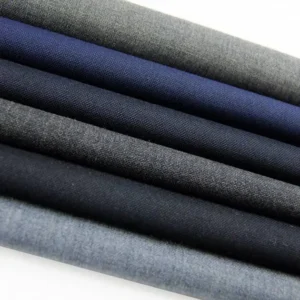
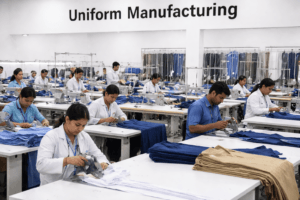
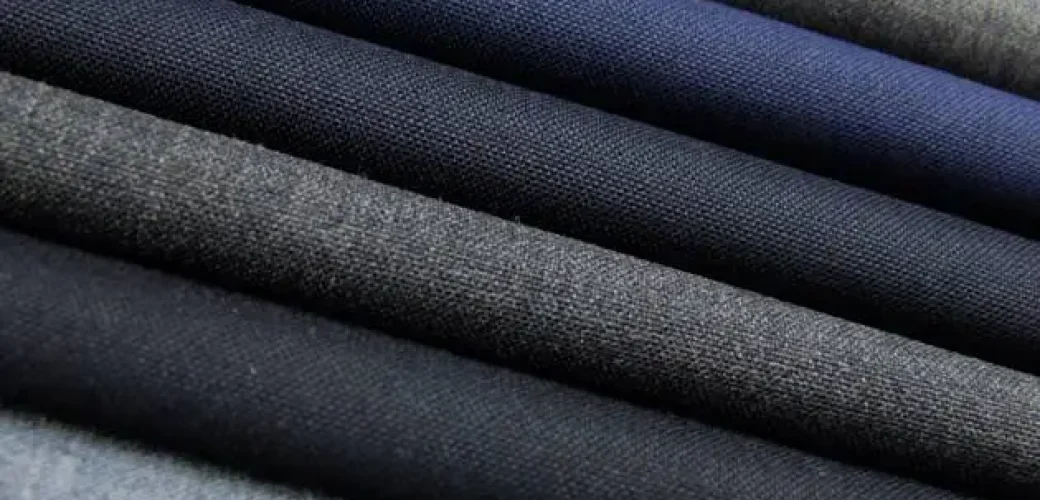
For tailored clothing that has to survive the heat and still look sharp, lighter wool blends and poly-viscose fabrics hold a press better than pure cotton while staying wearable. This is exactly the reasoning behind a lot of the region’s suiting and uniform fabric choices — comfort and durability tuned to a hot climate, not to a European winter.
Retail or wholesale — which are you?
This is the fork that decides everything. Buying a length or two for yourself: a retail shop in the market is perfect. No minimums, immediate, and you can negotiate. But if you’re buying to make something you’ll sell, or ordering the same fabric repeatedly, or need real volume, retail is the wrong door.
Trade buyers want a wholesaler: lower prices at volume, deeper stock, branded mill fabrics you can specify and repeat exactly, swatches before bulk, and delivery or export handled properly. The per-metre price is lower, but more importantly the consistency and reliability are built for business use. A wholesaler can supply the same shade of the same cloth a year from now; a market shop working through mixed lots often can’t.
Aurora Textiles is that wholesale option. We’re a fabric supplier and exporter in the Old Textile Market, Meena Bazaar, stocking branded men’s shirting, suiting, uniform and ethnic fabrics for tailors, uniform makers and trade buyers across the UAE and the Gulf. If you’re buying for a business rather than a weekend project, that’s the difference that will save you money and headaches over time.
Frequently asked questions
Where is the best place to buy fabric in Dubai?
The Old Textile Market in Meena Bazaar (Bur Dubai) has the widest choice and the best prices for most buyers. Malls and standalone shops offer a calmer, fixed-price experience. For bulk or trade orders, a wholesale supplier is the better route.
Is fabric cheaper in Dubai?
Often, yes — especially in the old market, where selection is huge and prices are negotiable. Buying wholesale brings the per-metre cost down further for larger quantities.
What fabric is best for Dubai’s climate?
Breathable natural fibres like cotton and linen are most comfortable in the heat. For tailored and work clothing, lighter wool blends and poly-viscose hold their shape while staying wearable.
Can I buy fabric wholesale in Dubai?
Yes. Wholesale suppliers serve tailors, boutiques and uniform makers with bulk quantities, branded fabrics and export. Aurora Textiles supplies wholesale from the Old Textile Market in Meena Bazaar.