Most uniforms don’t wear out. They get washed out. Water that’s too hot, a dryer on full heat, a splash of bleach, an afternoon drying on a sunny rooftop: each one takes a little off a garment’s life. If you want to make work uniforms last longer, a lot of the gains come from how they’re washed, dried and stored.
The good news is that most of the fixes cost nothing. Here’s what actually makes a difference, whether your uniforms go to an industrial laundry or are washed at home by staff.
Start with the care label
It sounds obvious, yet it’s the step most often skipped. The label tells you the temperature, drying and ironing limits the fabric was made for. Treat those limits as a maximum, not a target. Flame-resistant and other protective garments are a special case: washing them the wrong way can reduce their protection, so follow the maker’s instructions exactly.
Wash cooler, and wash like with like
Hot washes speed up fading and shrinkage, and they’re hard on elastane in stretch fabrics. For everyday soiling, a cooler wash with a good detergent usually does the job. Sort by colour so dark uniforms don’t pick up lint and pale ones don’t pick up dye. Turn garments inside out to protect the face of the fabric and any logos, and fasten zips and hooks so they don’t snag everything else in the drum.
Go easy on detergent and skip the softener
More detergent doesn’t mean cleaner. Too much can leave a residue that dulls fabric over time. Fabric softener causes more trouble than most people realise: it coats the fibres, can shorten the life of elastane, and can reduce the performance of finishes such as moisture-wicking. Most uniforms simply don’t need it.
Keep chlorine bleach away from polyester and colours
Chlorine bleach can turn polyester yellow and leave fading or marks on coloured uniforms. If you need to keep whites bright, there are gentler ways to do it, and the fabric itself makes a big difference. We cover that in our guide to why white uniforms turn dull.
Dry in the shade, not on the roof
This one matters more in the UAE than almost anywhere. Strong sun fades dyes quickly, and a uniform left on a balcony or rooftop every afternoon will lose its colour long before the fabric wears out. Dry garments inside out and in the shade. If you use a tumble dryer, choose low heat and take garments out while they’re very slightly damp. High heat shrinks cotton, can damage polyester and is one of the fastest ways to shorten a uniform’s life.
Hang it up straight away
Uniforms left in a heap after washing set hard creases that then need a hotter iron to remove. Hang shirts and trousers as soon as the cycle ends and you cut both ironing time and heat damage.
Iron at the right temperature
Use the setting for the fibre blend, not the hottest one on the dial. Too much heat leaves a shine on dark trousers and can scorch synthetics. A pressing cloth over dark fabrics, and ironing logos from the reverse side, keeps both looking newer for longer.
Treat stains fast, and never dry a stain
The longer a stain sits, the harder it is to shift. Rinse it in cold water as soon as you can and treat it before washing. Check the garment before it goes into a dryer, because heat can set a stain for good.
Fix small problems while they’re small
A loose button becomes a lost button. A small open seam becomes a torn panel. Ten minutes of repair can keep a garment in service for months, so make it easy for staff to hand in uniforms that need attention.
Store uniforms properly
Hang uniforms rather than stuffing them into lockers, and make sure they’re completely dry before they’re put away. In humid weather, damp storage invites mildew and odours that are hard to get rid of.
Give each person enough sets
When someone has only two sets, every uniform has to be washed and dried overnight to be ready for the next shift. That’s when garments get hot-washed and tumble-dried on high just to make the deadline. A common rule of thumb is three sets per person: one being worn, one in the wash and one ready to go. It won’t change how many wears a garment can take, but it gives every set time to be cared for properly.
Choose fabric that suits how it will be washed
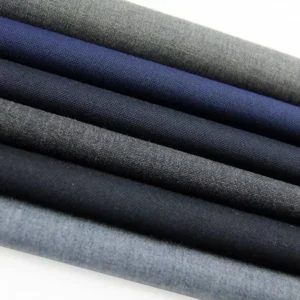
Care can only go so far if the fabric doesn’t suit the job. If your uniforms go through an industrial laundry, choose a fabric built for frequent, heavy washing, such as polycotton or a workwear fabric from Klopman. For roles where comfort comes first and washing is gentler, cotton can be the better choice. When you top up stock, buy the same fabric line again so new uniforms match the old ones.
If you want to see how a longer life translates into money, our guide to uniform cost per wear walks through the numbers.
Make it easy for your team
Most uniform care happens at home or in a laundry room, not in a procurement meeting. A simple care card with three or four rules, handed out with each new set, will do more than a long policy nobody reads.
Aurora Textiles supplies uniform fabrics wholesale from the Old Textile Market in Meena Bazaar, Dubai, to uniform makers and businesses across the UAE and the Gulf. If you’re reviewing your uniforms, talk to us about fabrics that suit the way yours are worn and washed.
Frequently asked questions
How often should work uniforms be replaced?
There is no fixed number. Replace a uniform when it stops meeting your appearance standard, such as faded colour, pilling or a frayed collar, rather than on a calendar. Good care and the right fabric push that point further out.
Can work uniforms go in the tumble dryer?
Only if the care label allows it, and then on low heat. Air drying in the shade is gentler and helps uniforms keep their size and colour for longer.
Why do uniforms fade so quickly?
The usual causes are hot washes, too much detergent, bleach and drying in direct sun. Dye quality matters too, which is why the choice of fabric affects how long the colour lasts.
How many uniform sets does each employee need?
Three sets per person is a common rule of thumb: one worn, one in the wash and one ready. Roles with heavy soiling or double shifts may need more.
Does fabric softener damage uniforms?
It can. Softener coats the fibres, which can shorten the life of elastane in stretch fabrics and reduce the performance of finishes such as moisture-wicking. Most uniforms don’t need it.