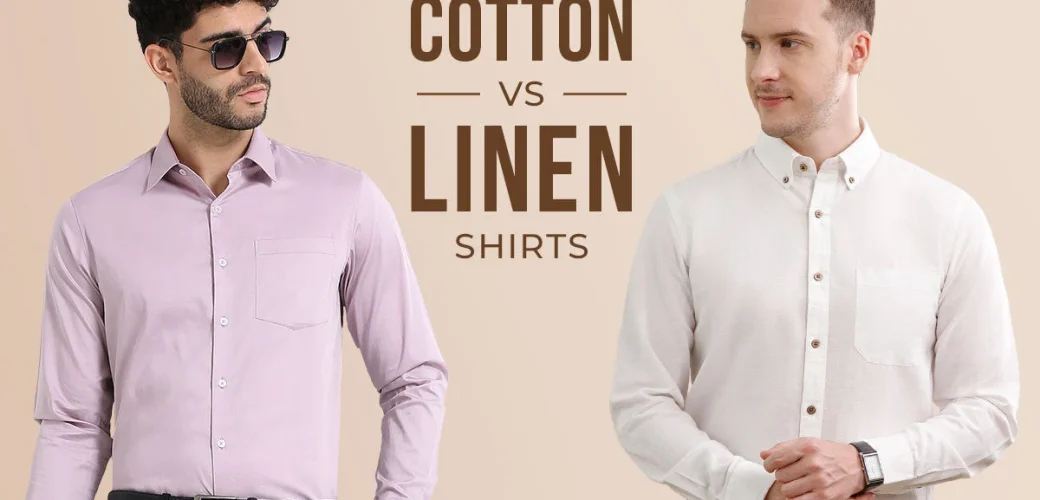
When summer days in Dubai pass 40°C, the fabric you wear matters as much as the cut. Linen and cotton are the two natural fibres most people reach for, and both get called breathable. They behave quite differently once you step outside, though, and that’s what the linen vs cotton question really comes down to.
The short answer: linen is cooler, dries faster and feels lighter in serious heat, but it creases easily and usually costs more. Cotton is softer from day one, easier to care for and more versatile, especially for office wear. For outdoor heat and relaxed tailoring, choose linen. For everyday shirts that spend most of the day in air-conditioned rooms, cotton or a linen-cotton blend often makes more sense.
Where the difference starts
Cotton comes from the soft fibres that grow around the seeds of the cotton plant. Linen is made from fibres in the stalk of the flax plant. Flax fibres are longer, stronger and far less elastic than cotton, and nearly every practical difference between the two fabrics traces back to that.
Which one keeps you cooler?
Linen, in most real conditions. Its fibres take up moisture and let it go quickly, and linen is usually woven more openly, so air moves through the cloth. It even feels cool to the touch. Cotton breathes well too, but it holds on to moisture for longer. A cotton shirt that gets soaked on a humid afternoon tends to stay damp and cling, while linen dries out and keeps moving air.
Comfort and feel
Cotton is soft straight away. Linen starts out crisper and slightly textured, then softens noticeably with every wash. Some people love that lived-in feel. Others prefer cotton’s smoothness against the skin, especially for a shirt worn from morning to night.
The wrinkle question
Linen creases. That comes from the fibre itself: flax has very little elasticity, so once it bends it stays bent instead of springing back. Plenty of people treat the relaxed look as part of linen’s appeal, and in a summer suit or a kurta it usually is. For a shirt that has to look crisp at six in the evening after a day of meetings, cotton or a linen-cotton blend will hold up better.
Durability and care
Linen is a strong fibre, and it’s one of the few that gets stronger when wet, which helps it cope with washing. Its weak spot is sharp creasing in the same place over and over. Fold a linen garment along the same line for years and the fibres can wear through at collars and hems. Wash linen gently, air-dry it rather than tumble drying, and iron it while it’s still slightly damp.
Cotton is the easier fabric to live with. It handles everyday washing well, though it can shrink if it’s washed hot or dried on high heat.
Cost
Linen usually costs more than cotton of a similar quality, partly because flax takes more work to turn into fabric. Whether that premium is worth it depends on how much of the year you’ll wear it. In the UAE, that’s most of the year.
Linen vs cotton at a glance
| Linen | Cotton | |
| Breathability in heat | Excellent, dries quickly | Good, holds moisture longer |
| Feel | Crisp at first, softens with washing | Soft from day one |
| Creasing | Creases easily | Creases less |
| Care | Gentle wash, air dry | Easy, avoid high heat |
| Cost | Usually higher | Usually lower |
| Best for | Summer suits, kurtas, relaxed shirts | Office shirts, everyday wear |
What about blends?
Linen-cotton blends sit in the middle, and for a lot of people in Dubai they’re the sweet spot. You keep much of linen’s breathability and texture, gain some of cotton’s softness, and get noticeably fewer creases. Linen-viscose blends add drape and a smoother handle. If pure linen feels like too much upkeep, a blend is the first thing to try.
Choosing linen or cotton for tailoring
If you’re a tailor or buying fabric for a collection, a few quick checks make a big difference.
Weight
Lighter linens suit shirts and kurtas. Heavier linens hold their shape better in trousers, jackets and suits.
Weave
Hold the cloth up to the light. An even, consistent weave will last longer than a loose or patchy one.
Slubs
The small, irregular thick spots in linen yarn are a natural feature, not a fault. The finest linens simply have fewer of them.
Cotton weave
With cotton, the weave matters as much as the fibre. Poplin gives a smooth, formal shirt, twill adds a little body, and Oxford cloth brings texture and toughness.
Repeat orders
If you plan to reorder, check that the fabric is a regular line, so the next batch matches the last one.
So which should you choose?
Wear linen when heat is the main problem: outdoor events, summer weddings, weekends, relaxed tailoring and festive kurtas. Choose cotton when a shirt needs to look sharp all day, cope with frequent washing and spend most of its life indoors. If you can’t decide, a linen-cotton blend is a sensible middle ground. For other fabrics that work in the heat, see our guide to lightweight fabrics for the UAE.
Aurora Textiles supplies both. Our linen range includes pure linen and linen blends in solids, checks and stripes, alongside a wide choice of cotton shirting fabric. Everything is available wholesale from the Old Textile Market in Meena Bazaar, Dubai, and tailors and trade buyers can ask us for swatches before ordering in bulk.
Frequently asked questions
Is linen cooler than cotton?
Generally, yes. Linen takes up and releases moisture quickly and is usually woven more openly, so it feels cooler and dries faster than cotton in hot weather.
Why does linen wrinkle so easily?
Flax fibres have very little elasticity, so once linen is creased it doesn’t spring back the way cotton or wool does. Blends with cotton or viscose crease less.
Is linen good for office wear in Dubai?
It can be, especially for relaxed or summer business looks. For shirts that need to stay crisp all day in air-conditioned offices, cotton or a linen-cotton blend is usually more practical.
Does linen shrink?
It can, particularly in a hot wash or a tumble dryer. Wash it gently, air-dry it and follow the care label to keep shrinkage to a minimum.
Is a linen-cotton blend worth it?
For many people in the UAE, yes. A blend keeps much of linen’s breathability while creasing less and feeling softer, which makes it easier to wear every day.