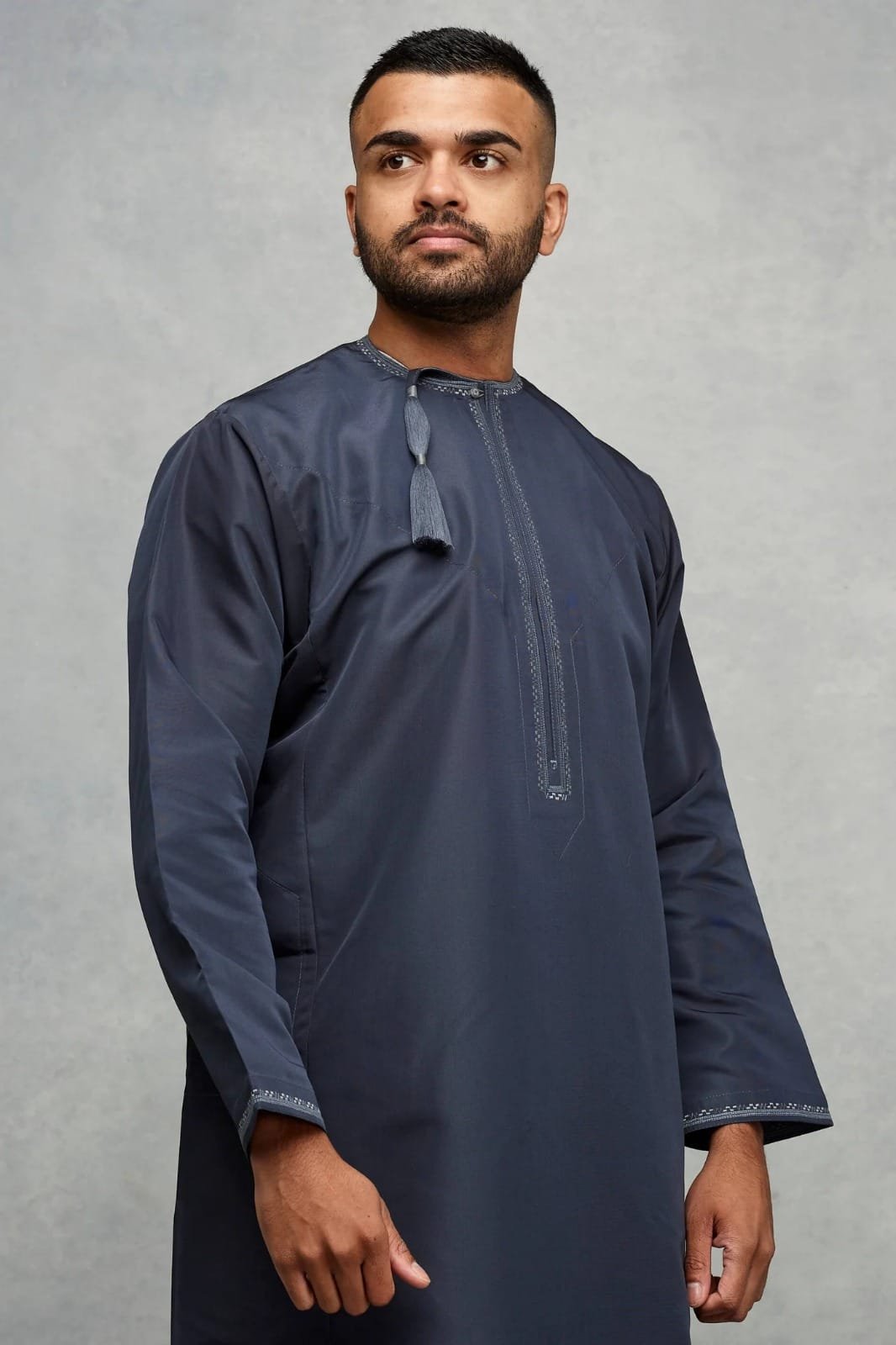
The dishdasha — also known as thobe or thawb—is more than a traditional garment. It is a daily essential across the Middle East, designed to balance comfort, elegance, and practicality in diverse climates.
Choosing the right dishdasha fabric is not about trends alone; it depends largely on weather conditions and personal preferences such as feel, drape, maintenance, and breathability. As a leading men’s fabric supplier in the UAE, Aurora Textiles works closely with brands and tailors to source fabrics that perform consistently across seasons.
Below, we categorise the best fabrics for dishdasha based on climate and wearer needs.
Fabrics for Hot and Warm Weather Dishdasha
In warmer months, the priority shifts to breathability, moisture management, and lightweight comfort. Fabrics used for summer Dishdasha must allow airflow while maintaining a clean, structured appearance.
Poly Cotton – Balanced Comfort for Daily Wear
Poly cotton is one of the most widely used dishdasha fabrics for warm weather. It combines the softness of cotton with the durability and easy care of polyester.
- Comfortable for extended daily wear
- Helps maintain shape and color over time
- Suitable for work, prayers, and everyday use
This blend is especially preferred for dishdasha worn frequently, where practicality matters as much as appearance.
Poly Tencel – Smooth, Lightweight, and Modern
As temperatures rise further, poly-tencel blends are increasingly preferred. Tencel fibers are known for their smooth texture and ability to enhance airflow.
- Lightweight and soft against the skin
- Offers a refined drape for modern dishdasha styling
- Suitable for warm climates and long hours of wear
Poly-tencel thobe fabric is often chosen by wearers who prioritize a premium feel without compromising comfort.
Fabrics for Mild to Cooler Weather Dishdasha
During cooler months or in air-conditioned environments, wearers tend to prefer fabrics with slightly more body and warmth, while still maintaining breathability.
Poly Wool – Popular for Winter Dishdasha Styles
For a winter dishdasha, poly wool blends are a well-established choice. These fabrics provide structure and insulation without being heavy.
- Better warmth retention compared to summer fabrics
- Elegant drape suitable for formal or evening wear
- Maintains a crisp appearance throughout the day
Poly wool is particularly popular for ceremonial dishdasha and cooler evening wear across the region.
Poly Viscose – Occasional Preference for Structured Wear
Polyviscose is sometimes selected for dishdasha where a smoother finish and structured fall are desired.
- Clean surface with a refined look
- Comfortable for moderate temperatures
- Suitable for formal or occasional dishdasha wear
While not a primary summer fabric, polyviscose finds its place in transitional weather and indoor settings.
Year-Round Preference: 100% Polyester dishdasha Fabric
Across seasons, 100% polyester remains a strong preference for many wearers due to its consistency and low maintenance.
- Durable and resistant to creasing
- Retains color and shape after repeated washing
- Suitable for both warm and mild climates depending on weave
This thawb fabric option is often chosen for uniforms, daily wear, and large-scale production where reliability is essential.
Choosing the Right dishdasha Fabric: What Matters Most
Selecting the right dishdasha fabric ultimately depends on:
- Climate and seasonal temperature
- Frequency of wear
- Preference for softness, structure, or easy care
- Occasion—daily wear, formal use, or ceremonial attire
At Aurora Textiles, we supply a wide range of dishdasha fabrics to meet these varying needs, supporting brands and tailors across the UAE and other Middle Eastern markets.
The best fabric for a dishdasha is not universal—it changes with weather conditions and wearer expectations. From breathable poly cotton and poly-tencel for warmer months to structured poly wool for a winter dishdasha, each fabric serves a distinct purpose.
With deep expertise in men’s fabrics, Aurora Textiles continues to supply carefully selected dishdasha materials that combine tradition, comfort, and performance—season after season.